
FIRE PRACTICES
Fire Practices
Smart Forests and Fundación Mar Adentro
Fire practices refer to the methods by which communities and organizations respond to fire events. Currently, in Chile and worldwide, most resources are oriented toward “fighting” fires. In this sense, fires differ from other disasters and hazards, as they can require greater attention to preparedness. As Moritz and co-authors note, “The ‘command and control’ approach typically used in fire management neglects the fundamental role that fire regimes have in maintaining biodiversity and key ecosystem services.”Moritz et al., “Learning to Coexist with Wildfire,” 58. Fire is an ecology that extends beyond the moment of the blaze. For this reason, fire practices need to engage with all aspects of fire ecologies. Fire practices can encompass a range of activities, from community plans and preparedness committees to local observations and educational programs. While they can include efforts to respond to fires when they occur, they can also extend to restoring landscapes and supporting communities to recover after fire events have impacted them.
The previous chapters have examined fire networks, or who is involved in addressing fire, and fire technologies, or what infrastructures and tools are mobilized in response to fires. This chapter investigates how communities and organizations undertake concrete actions to improve resilience across fire lifecycles. In our Field Schools, interviews and fieldwork, we documented multiple practices related to prevention activities, particularly at the levels of governance, territorial planning, and environmental education. In the focus on prevention, participants emphasized the importance of training and education, creating defensive infrastructures such as firebreaks, vegetation clearing and pruning, and preparing for coordinated responses. Further practices included the construction of preventive infrastructures, mobilization of local knowledge, and fire management.
While participants and collaborators identified many successful fire practices already underway, they also noted several opportunities for improving efforts, including by addressing shortcomings in the design and implementation of fire prevention plans, overcoming the disconnection across diverse communities and institutions, improving the resources and education available to support fire practices, and enhancing post-fire restoration and recovery.Tiara Torres et al., “Community Fire Plans.”
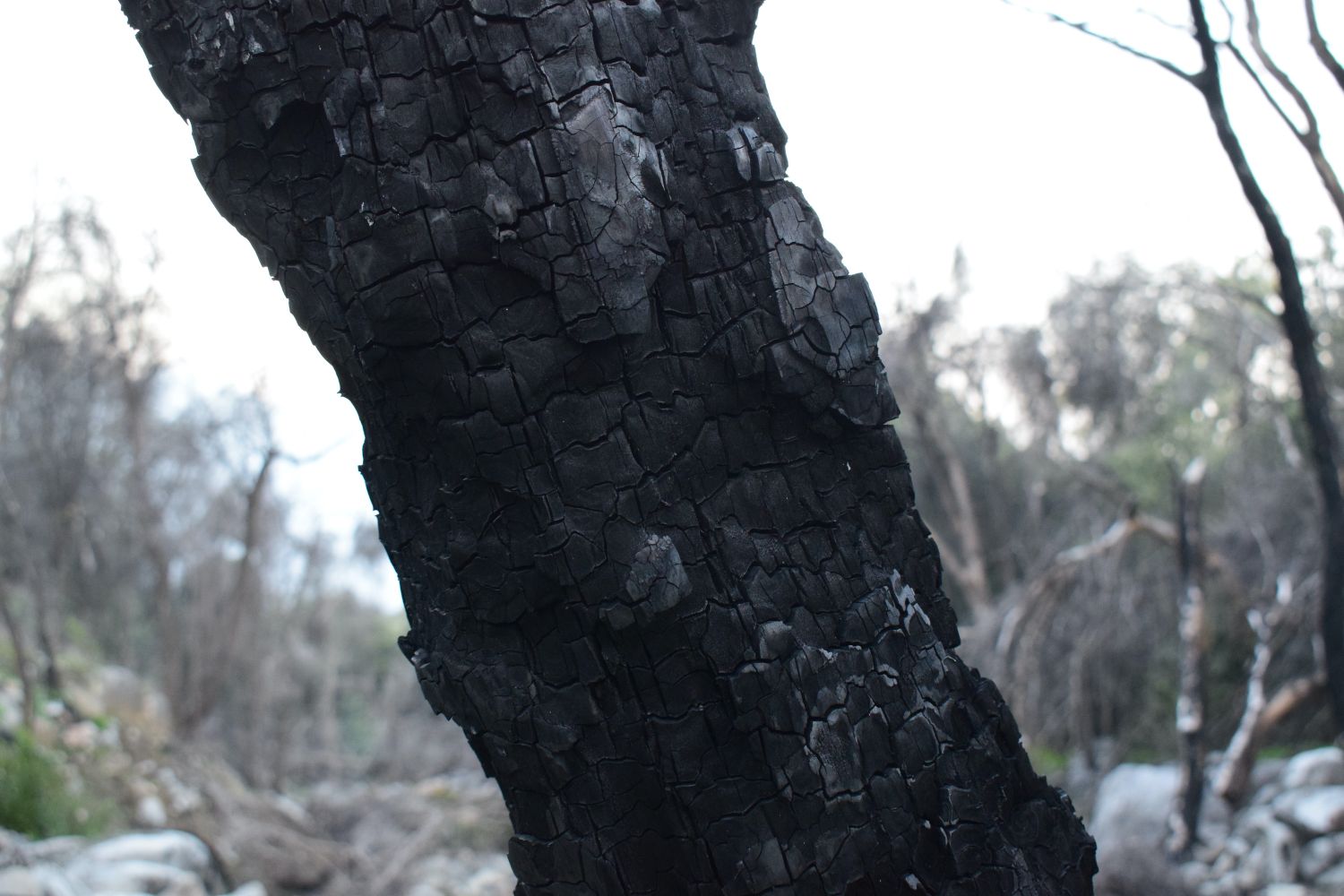
Evidence of past fires at EcoBrigada Chukaw Mahuida. Paula Tiara Torres for Smart Forests, 2024.
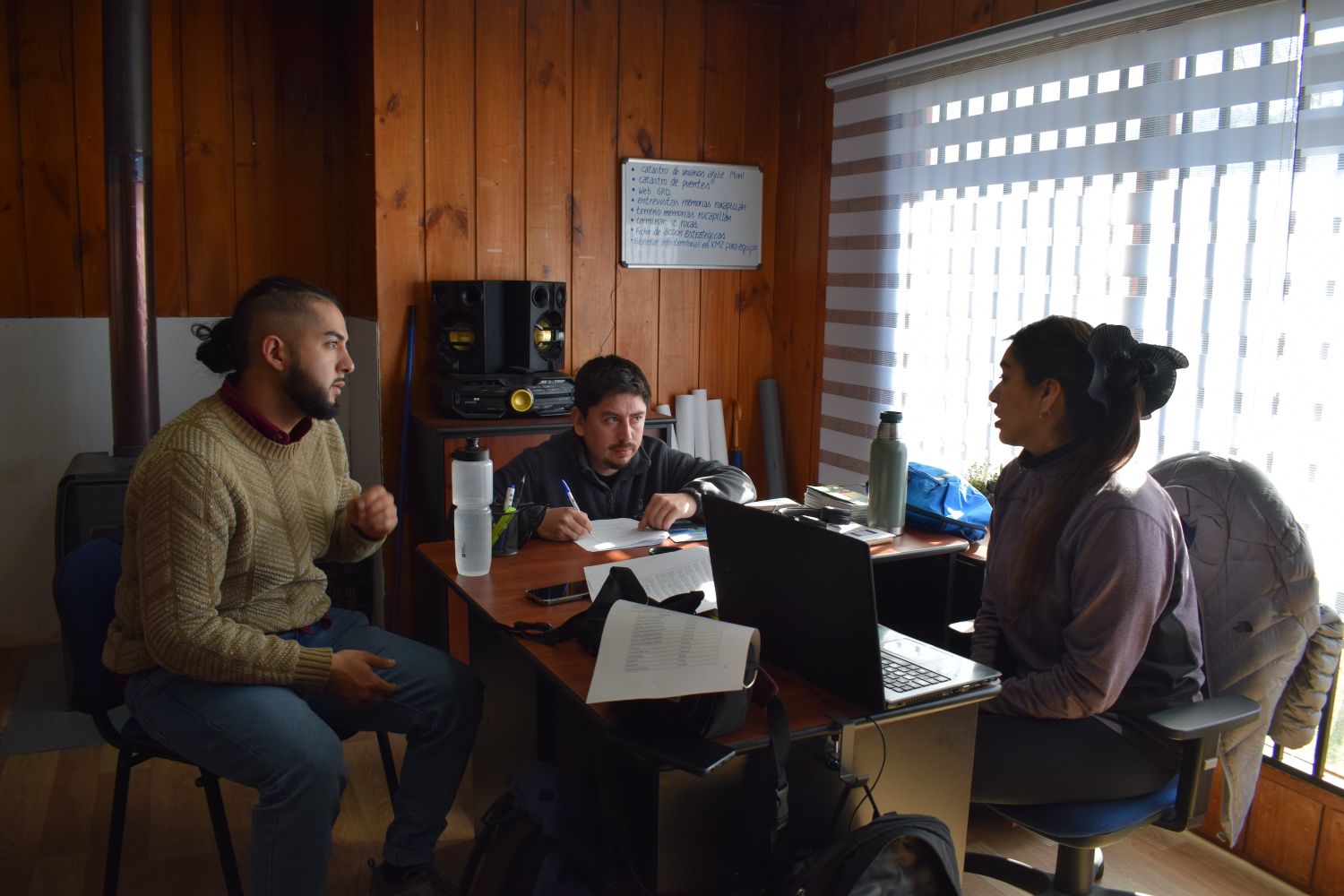
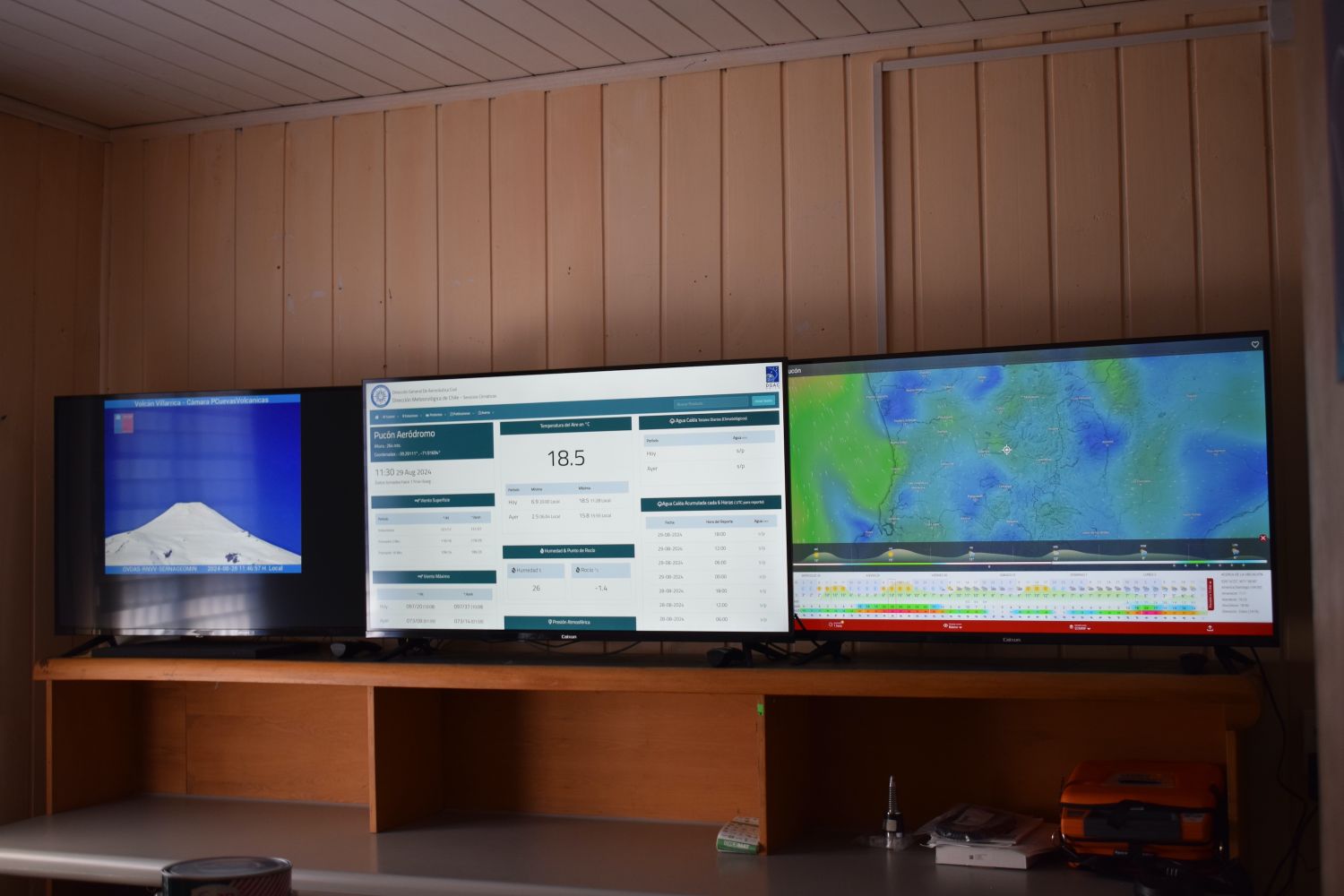
Site visit to Disaster Risk Management Directorate, Pucón Municipality. Paula Tiara Torres for Smart Forests, 2024.
Community fire prevention plans
Community fire prevention plans are a prominent strategy used nationwide in Chile. These practices acknowledge the increasing risk of fires and the need for local and grounded responses, while incorporating collaboration with institutions, territorial planning, diverse ecological knowledge, and technical measures, together with community-based action. CONAF has developed a methodology for communities to adopt in relation to the different regions of Chile. This strategy involves mobilizing community groups to engage in eight steps outlined in the method, including:
- Identifying plan tasks and objectives
- Working with communities in workshops, mapping exercises, and creating educational resources
- Collecting information on the relevant territory and inhabitants
- Assessing and analyzing risk
- Preparing the plan and actions
- Validating the plan
- Implementing the plan
- Monitoring and reviewing the plan
In this standardized process, CONAF representatives work with communities to establish a community council and then host four workshops on topics including strengthening homes against forest fires; creating community fuel management actions and areas of self-protection; creating an emergency action plan; and establishing detection, warning, and community first-response plans.CONAF, «Metodología para la elaboración de planes comunitarios de prevención de incendios forestales».
Alongside these methods, several local and regional governments are undertaking territorial planning in wildland-urban interface zones (WUI), which can involve participatory practices. When managing risk related to land use and fire hotspots, local and regional governments often work with local actors and communities to identify hazards, develop training and monitoring programs, conduct preparedness drills, and establish prevention committees to ensure coordinated approaches. These measures can also incorporate risk mapping that CONAF conducts at a regional level, which models potential vulnerability, susceptibility, and exposure to fire.
With these more standardized methods, there is recognition that further adaptation to local contexts is always required to ensure the viability of plans and practices. In areas such as La Araucanía, fire is an important component of agriculture and clearing vegetation, as well as Mapuche traditions. Community fire plans and practices would then need to adapt to customary fire uses by identifying practices and developing plans for managing risks, such as not permitting fires during hot and dry periods, and ensuring a burn-permitting process is in place. As mentioned in the earlier chapter on networks, communities also have memories of fire patterns that are often not documented by CONAF but can be crucial for establishing finer-scale understandings and responses to fire events. As our interviews across multiple regions and territories further demonstrated,Tiara Torres et al., “Exchange of Community Experiences for the Prevention of Forest Fires.” some fire practices might not be viable in all territories, such as the Buena Cabra technique of grazing animals to consume vegetation and create natural firebreaks.Fundación Lepe, «Buena Cabra».
Collaborative practices among community members and local institutions, which involve mapping and understanding the local territory, are central to crafting effective wildfire prevention plans and strengthening local preparedness and leadership. During our Field School held in Pucón, participants especially noted the importance of building self-managed initiatives that build trust between organizations and communities while also facilitating exchanges and learning within communities.Tiara Torres et al., “Exchange of Community Experiences for the Prevention of Forest Fires.” However, as participants across Field Schools held in Temuco and Pucón noted, changing demographics within regions can create tensions among different types of residents, while potentially creating obstacles to consistently adopting tools and protocols such as home safety plans, evacuation strategies, responsible burning practices, and community drills. In these cases, it could be useful to have local and regional agencies, including CONAF, contribute to mediating exchanges and providing educational resources on responsible fire practices to residents and visitors.
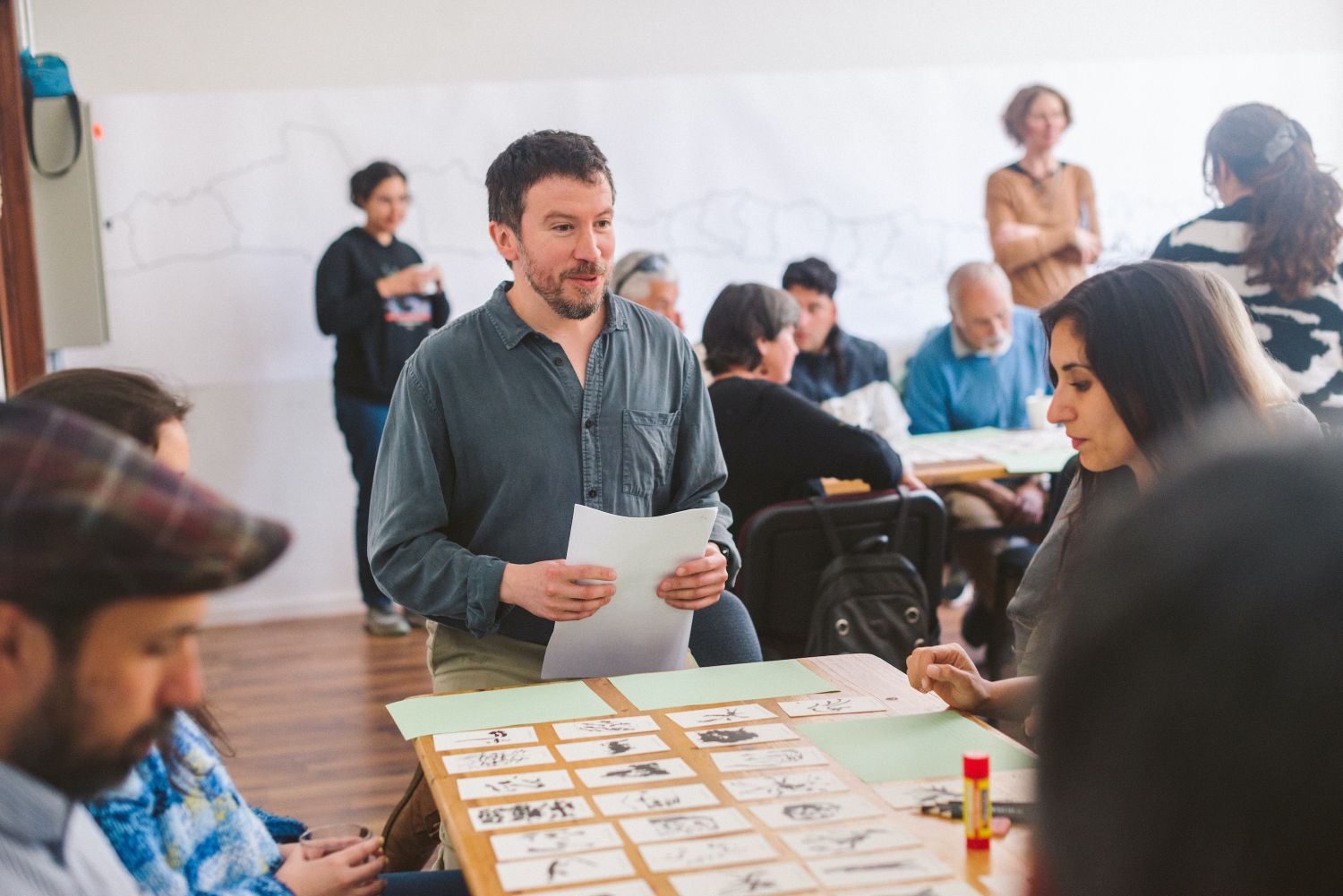
Pucón Field School with contribution from Tomás Altamirano. Josefina Astorga for Smart Forests, 2024.
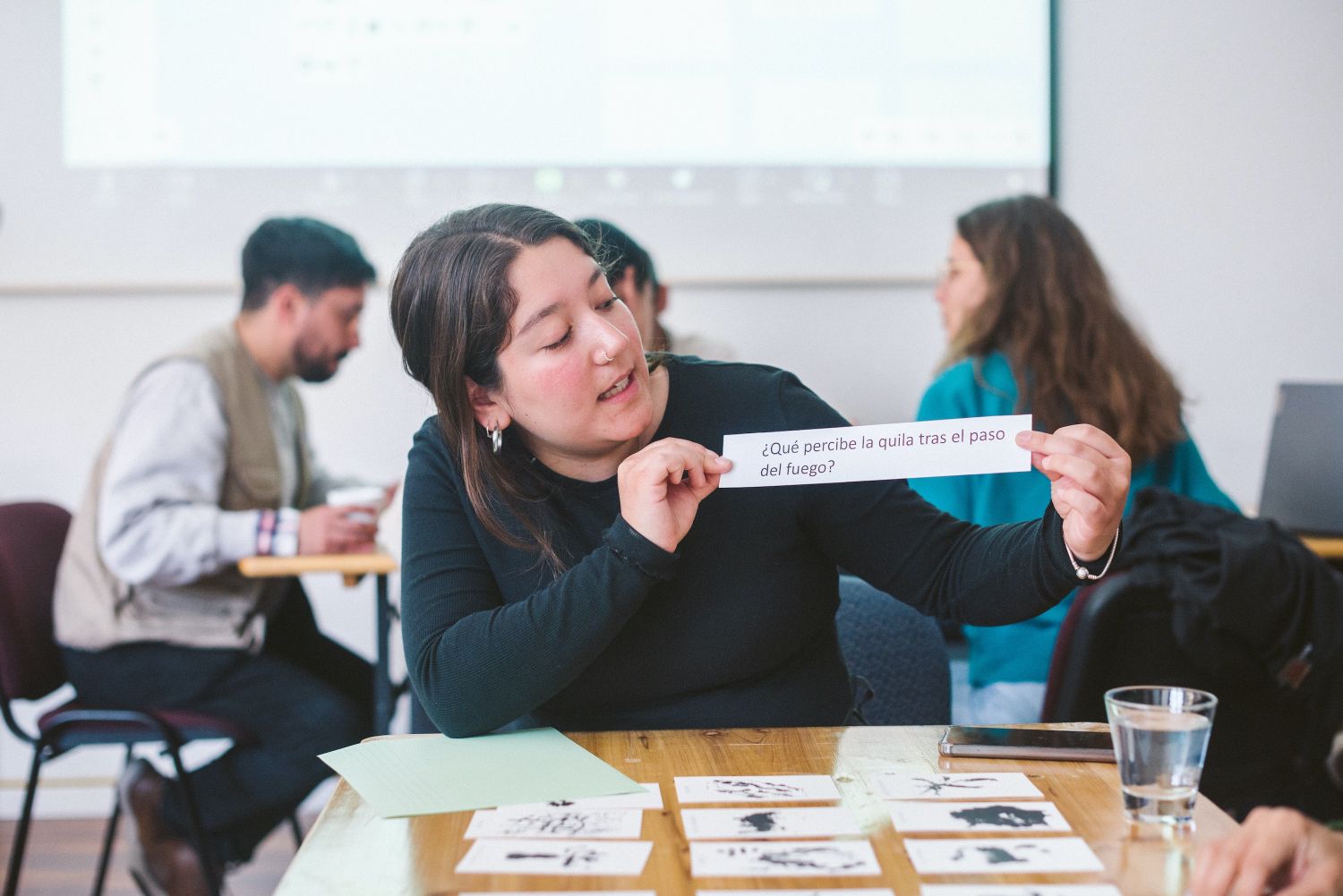
Pucón Field School with contribution from Paula Tiara Torres. Josefina Astorga for Smart Forests, 2024.
Beyond the blaze
As our many conversations and research have demonstrated, fire extends well beyond the moment of emergency.UNEP, Spreading Like Wildfire. In addition, fire is not only a natural ecology, but it is also a cultural one. As Field School and interview participants noted, it is crucial to understand that people have complex, cultural and even spiritual relationships with fire. As one Temuco Field School participant noted, there is a certain inevitability to fire in the Araucanía region due to the long-standing use of fire in land practices, including Mapuche cultivation techniques. The participant notes:
“It's not possible that there are no fires, but what is possible is that we can manage them, right? […] So, perhaps the regularization of fire or the alternative use […] is the way forward.”
Among participants, there was a common sense that, rather than simply banning burning, it was necessary to better regulate it. As one participant noted:
“The other issue that came up in the discussion is the regulation of fire. We know that it is a vital element in our lives, but it still needs more regulation regarding its use in burning. With respect to education, how are we going to regulate and set minimum standards, so that everything to do with it improves over time?”
Here, participants emphasized that regulation should include education, so it is not merely a matter of prohibition. Furthermore, regulation needs to involve territorial knowledge and be co-constructed with communities so it is not perceived as a top-down mode of governance. These local and cultural engagements with fire presented an opportunity to promote cultural understanding and change through territorial actions. As one Field School participant summarized:
“This means that we generate a link with the territory, and the link generates care and responsibility for us. Therefore, when we are linked, we recognize that we are part of a territory.”Group discussions at Smart Forests Field School, Temuco (April 2024).
Territorial connections can facilitate a sense of shared responsibility for land and forests, while also integrating ancestral and local knowledge through sharing and communicating traditional practices and “histories of the land.”
Such territorial connections extend to building and maintaining preventive ecological infrastructures to facilitate fire strategies. These practices can include vegetation management, pruning, and prescribed burns. Firebreaks are a measure that CONAF widely uses and promotes, along with mapping and even creating water sources to support fire response efforts. Efforts to improve road access in topographically challenging mountain regions can also be crucial for enabling effective fire response.
At the same time, while community fire prevention plans, protocols, and infrastructures can enable more robust responses to fire, they are not always applied consistently. For this reason, as noted in the Pucón-based Field School, hands-on and practical activities can be an important way to ensure grassroots infrastructures and initiatives are effectively implemented. Such practices can further involve collaboration with municipalities and forestry agencies, who can provide technical assistance as part of field-based activities. This perspective resonates with contributions from the Temuco-based Field School, where one participant noted:
“In practices, the most concrete one is that the creation of physical prevention structures is done with substantial community participation […] because there I think people understand, get involved and also understand how the field works, how those practices work, like prevention, like in situ, in the part of networks, that is, that there are community fire prevention committees with representation not only from neighborhood associations, the typical regulated organizations, so to speak, but also from communities and social organizations that can be like NGOs or social movements.”Group discussions at Smart Forests Field School, Temuco (April 2024).
As the interview with Fernanda Romero in this collection further notes, regular training sessions can be a way to build awareness and readiness for fires, while also communicating how fires tend to start, what difficult decisions might need to be taken to shape environments in response to fire risk, and what modes of community organization are needed to ensure people are ready to respond and support one another. In other words, “Fires aren’t real until they happen to us, and it shouldn’t be this way.”See Romero and Fundación Mar Adentro, “Signs of resilience.” The efforts at Altos de Cantillana indicate the central role that environmental education plays in understanding fire ecology and contributing to fire practices that enable prevention and conservation. For many Field School participants and interviewees, environmental education involves not only sensitizing communities to wildfire risks but also engaging them in detection efforts, understanding land histories and ancestral knowledge, contributing to land stewardship and conservation efforts, and participating in community events and collaborations.
While participants and interviewees were optimistic about the fire practices underway and in development, they still identified challenges in ensuring consistency and sustaining engagement. Fire plans and protocols can be unevenly implemented, access to resources can be unequal across communities and regions, wildfire monitoring is not always systematic, and new residents or visitors to rural areas such as Araucanía can be unfamiliar with fire risks and traditional land practices.
At the same time, there are challenges in ensuring that fire practices are community-oriented and community-led. While CONAF’s fire prevention method expects communities to be self-managed, this can create disparities across communities that differ in their level of resources and access to technology and data. For this reason, participants felt that fire prevention and detection should include standardized practices and resources at a level similar to those for earthquakes, while not excluding local adaptations and community input. The development of such fire practices also includes more significant engagement with post-fire response and recovery across ecological and human communities. This would be a way to ensure that fire life cycles are fully addressed and incorporated into broader strategies for adapting to and regenerating changing environments.

Signs of Resilience
after the Fires
in Altos de Cantillana
Fernanda Romero and Fundación Mar Adentro
In December 2023, the Altos de Cantillana Nature Reserve suffered a fire that destroyed almost 100 hectares. In this interview with Violeta Bustos Vaccia from Fundación Mar Adentro, the coordinator of the protected area and president of Así Conserva Chile,Así Conserva Chile [This Is How You Preserve Chile], https://asiconservachile.org.
This interview was originally published on the Fundación Mar Adentro website at: https://fundacionmaradentro.cl/en/articulo/brotes-de-resiliencia-tras-los-incendios-en-altos-de-cantillana. Fernanda Romero, reflects on the fire. The ecologist and landscape architect has been a regular visitor to these sclerophyllous forest landscapesAccording to the Institute of Ecology and Biodiversity (IEB), the sclerophyllous forest is an ecological system that delivers nature to living beings and provides ideal conditions for the development of life. Among the species that make it up in our territory are peumo (Cryptocarya alba), boldo (Peumus boldus) and espino (Acacia caven), as well as the Chilean palm (Jubea chilensis). See https://ieb-chile.cl/noticia/los-servicios-ecosistemicos-del-bosque-esclerofilo-chileno. since childhood, becoming the fourth generation of her family to live in the area and the official coordinator for the conservation of the 12,000 hectares that make up the reserve.The reserve covers the municipalities of Melipilla, San Pedro, Alhue, Isla de Maipo and Paine. Weeks after the fire spread, Fernanda says that new shoots have emerged from the ground, a sign of nature's regeneration. How can we balance the need to tell hopeful stories in the face of disasters? What ways of interacting with each other as humans and more than humans contribute to disaster risk prevention? These are some of the issues addressed by one of the conservation leaders in Paine, who in 2022 was named a Living Human Treasure for her work in the Aculeo basin.
Fundación Mar Adentro (FMA): I understand that at least 16 of your great-great-grandparents are from Paine. How has your emotional, territorial and professional relationship to the area been, and what changes have you seen throughout the years?
Fernanda Romero (FR): My connection to the territory is very strong; I’ve given up many things to be here. Although my parents moved to Santiago when I was small and I later continued my studies in the capital, I came back every weekend and holiday season. I moved back permanently to Aculeo when I was 27 and built my house. I feel that sense of rootedness, and I have found ways to observe what happens here. Before the drought, for example, I would say for many years that Aculeo was like heaven on Earth. It was the perfect valley, as the basin was very well preserved. Then, there were activities that impacted the ecosystem, such as the presence of livestock and the construction of housing throughout the hills. I have also witnessed the legal fragility regarding the protection of biodiversity. In this land, I have experienced the call of conservation that carries a real sense of urgency. At the same time, I would say that I haven’t just explored conservation from the perspective of science, but from its biocultural and historical value. There have been archaeological remains of at least three cultures in Paine: Mapuche, Llolleo and Bato (their predecessors), and Inca.See https://enciclopediadigitalsantiago.cl/cultura-llolleo-y-bato.
On a professional level, on the other hand, I’ve coordinated a couple of different organizations: one for community-based youth, and a private law corporation called Aculeufu, in parallel to the creation of the corporation Altos de Cantillana, together with an ecotourism company to finance the corporations and activities that are hard to sustain due to the drought and decline in tourism. Altos de Cantillana arose within the framework of the GEF Cantillana project,The Regional Ministerial Secretariat (SEREMI) of the Ministry of the Environment of the Metropolitan Region (RM) in 2011 executed the project called “Conservation of Biodiversity in Los Altos de Cantillana”, also known as “GEF Cantillana”, where the United Nations Development Program (UNDP), acted as implementing agency of the Global Environment Facility (GEF). which was born thanks to trust, since my paternal grandfather was the foreman of the owner of these lands.The painter Joaquín Solo de Zaldívar and his family have managed this reserve for several generations. About my role here, I would say that I belong to this reserve, I am part of it.
FMA: As for the fires, how often have they happened? How have they impacted the area and what preventative or control measures have been taken?
FR: Regarding the history of fires in the area, I was able to reconstruct the last 60 years a while ago, interviewing people from the community. One of the most intense happened 10 years ago, when a hillside in Rangue caught fire; then, 7 years ago, another hillside had a fire, and this began to become more frequent with the drought. The problem is that, unfortunately, the fires seem like something far away when they don’t burn down houses, as people in the countryside don’t live in the hills but in the valleys; so although there is a memory of the fires, they are seen as distant occurrences.
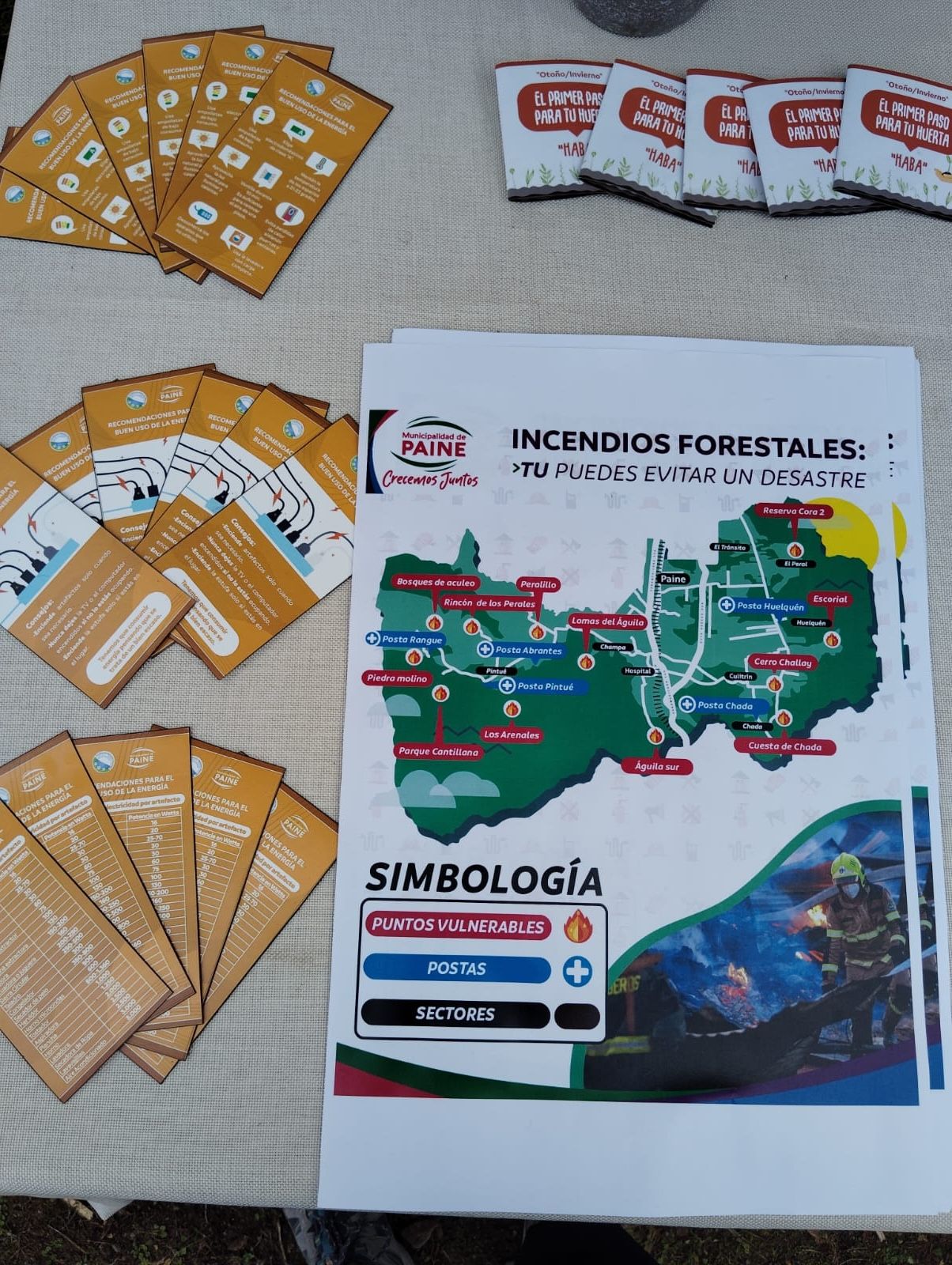
Fire prevention materials at Altos de Cantillana. Pablo González Rivas for Smart Forests, 2024.
The prevention of fires in the reserve has been strengthened since 2016, when we were able to build a team and I was officially designated its coordinator. With this team, we’ve now been able to reflect on the December fire. In a way, we were prepared for it to arrive from somewhere else, and, in that sense, the fires were surprising, even though we know they usually start outside the reserve and then enter it. We are currently starting a prevention project with the Metropolitan Regional Government of Santiago (GORE) as part of the network of natural sanctuaries of the region.
It has also been a complex decision, the need to make firebreaks, as it can imply cutting down vegetation and, eventually, possible bureaucratic limitations. Every year we have training sessions on fires, but I think we haven't had widespread awareness until now. Fires aren’t real until they happen to us, and it shouldn’t be this way.
We understand that the December fires occurred when a tree branch fell onto power lines. In this sense, maybe all the power lines should be underground, but to make this a reality, decision-makers need to have it as an option for prevention. When there is a fire, people lose, so we need to understand the impact of the fire to transform us into prevention agents.
FMA: I understand that some sprouts have begun to re-emerge after the fire. How can we understand this fast capacity for regeneration, and what lessons can it inspire for the protection of ecosystems?
FR: This year, the wonder of regeneration is not a trivial matter, as it is related to the 600 mm of precipitation that fell during the winter, a normal amount before the drought, which explains the current exuberance of Aculeo. This is why the area was able to conserve the ground humidity. Today, we have sprouts at the base of trees that reach up to 50 cm. We also formulated a restoration plan for the site of the fire which considers the collection of seeds for planting and nursery propagation.
In terms of lessons learned, we have a line of work based on field environmental philosophy,See https://ieb-chile.cl/aprende-sobre/filosofia-ambiental-de-campo. which proposes the conservation of study subjects, rather than objects. In this line of thinking, fire is an element of nature whose force creates impact but also allows us to appreciate collective consciousness and the regeneration of ecosystems.
Nature is regeneration and resilience. People inhabit other temporalities, and it’s good to remember that it isn’t about the survival of the strongest, but about who can adapt. My grandparents also lived through droughts, when the hill was bare due to the cutting of firewood for steam engines and, before, Aculeo was a desert and a tropical forest. While we strive for conservation, this does not imply maintaining the status quo. As humans, we must also take action, such as incorporating technologies to mitigate climate change. It is an issue of mobilizing willpower.
FMA: In light of the hopeful images that emerge amid the socio-ecological crisis we are going through, last winter it was widely reported that the Aculeo lake–located near the reserve–had water again. In your view, how can we balance the need to tell hopeful stories, given the dynamic reality of nature?
FR: Many times, as human beings, we tend to hold on to an individualistic kind of hope. This is where a critical sense becomes necessary, since we often evaluate everything according to our own scale. In addition, there is a pressing need for truthful and contextualized information, especially considering that there are people living in this valley who have never heard about conservation.
While a fire is more visible, sometimes we don’t pay attention to the intrinsic resilience of nature. Another perspective that perhaps isn’t known is that a drought can be more devastating than a fire, at an ecosystemic level, and those stories must be told as well. Earth has a constant timeline; as humans, we are part of that “script” and have a great influence on it.
I think the reason people don’t have inherent hope is, to a large degree, because of the disconnection with nature, which also affects mental health. I have some of my grandmother’s seeds; I love shelling them and planting them, as well as knitting. Today, there are people who have never connected with the therapeutic dimension of this contact, and the current technology distracts us.
Nature is what human beings need to be well. Today, young people are enclosed in cubicles, and the same thing happens in the educational system. Nature is a fractal: we see cycles in thousands of years and also every year, when a tomato is born, grows and dies. We can have hope that each spring there will be tomatoes. I say this because people don’t know. They think tomatoes grow on trees; they are disconnected.
FMA: In your role as administrator of the reserve, what collective experiences have impacted the habits of the surrounding community?
FR: The sense of community has been lost, in a way, if we compare it to traditional country life. Now people support each other, but it is something that grows stronger whenever there is an emergency. What I’m trying to say is that it’s hard to gather enough people for a course on putting out fires, but if there is an actual fire, the community activates itself to put it out. There is an idea of how to be a good community, and we’ve tried to create instances for this and take responsibility for creating connections with nature; for example, through education, although in practice it is the responsibility of the State. We seek to unite communities beyond disastrous events by organizing events where we can meet for reasons other than sharing painful moments.
The work we have done with schools in Rangue and Pintué has aimed to connect people and their own territories.These are schools with 200 to 250 students, with pre-basic and basic training that are located at the foot of the reserve. The social crisis around the drought actually brought us together, because the disaster was so severe that people began to give in. There was a wide range of interests at stake: from boatmen to farmers holding water rights—a reality very different from that of a reserve, which remains inseparable from the conservation work taking place here.
FMA: You have been working with these schools since 2016. What types of lessons have come out of this work with school communities?
FR: Ten years ago, we worked with the children of farmers and rural families. Over time, the profile of the students has become more urban and homogenous, and their vulnerabilities have increased. We have been carrying out educational actions in the schools around the reserve since 2005, and since 2016, we have drawn up a long-term project for educational actions each year. We’ve been given courses related to science and that is a great responsibility; we have worked at all levels.
We are currently aiming to teach at least one or two classes in the classroom and one as a field trip to the reserve. Before the pandemic, we had begun traveling to other conservation areas associated with Así Conserva Chile. These were educational tours that included overnight stays. However, the challenges have evolved, and teachers point out that the current conditions do not allow them to address issues such as the hypersexualization of children, making it necessary to think about psychological support resources.
There are structural issues in the educational context, and it is important to remember that, as conservation professionals, we live in a sort of bubble due to our contact with nature. An important lesson in that sense is that we cannot lose our perspective on reality. At the same time, one of the greatest challenges is dealing with frustrations and understanding that we cannot solve all these issues through conservation linked to education, but we can maintain a clear horizon for moving forward.
FMA: In conclusion, what perspectives on the relationship between humans and more-than-humans, in your experience, could inform analyses to prevent natural disasters in the future?
FR: The field environmental philosophy proposed by Ricardo Rozzi, as I mentioned, points to the need to see beyond landscapes, forests or a mass of vegetation, as we must be able to perceive the diversity of trees, bacteria or animals. Most people don’t know what we are talking about when we speak of nature, conservation and the environment. These areas are usually related to pollution and recycling; that is, the realities most within reach for most people.
We must stop seeing landscapes and instead see them as living and complex ecosystems; that is, it is a living ecosystem that burns, not a landscape. It is necessary to understand the impact of ecosystems on people. For example, residents of Santiago must remember that we owe our water to the mountain range and that we inhabit land formed by processes over thousands of years. The rise in food prices and the increase in food imports must be linked to our growing inability to produce food due to soil scarcity. We must understand the chain of relationships that make our lives possible.
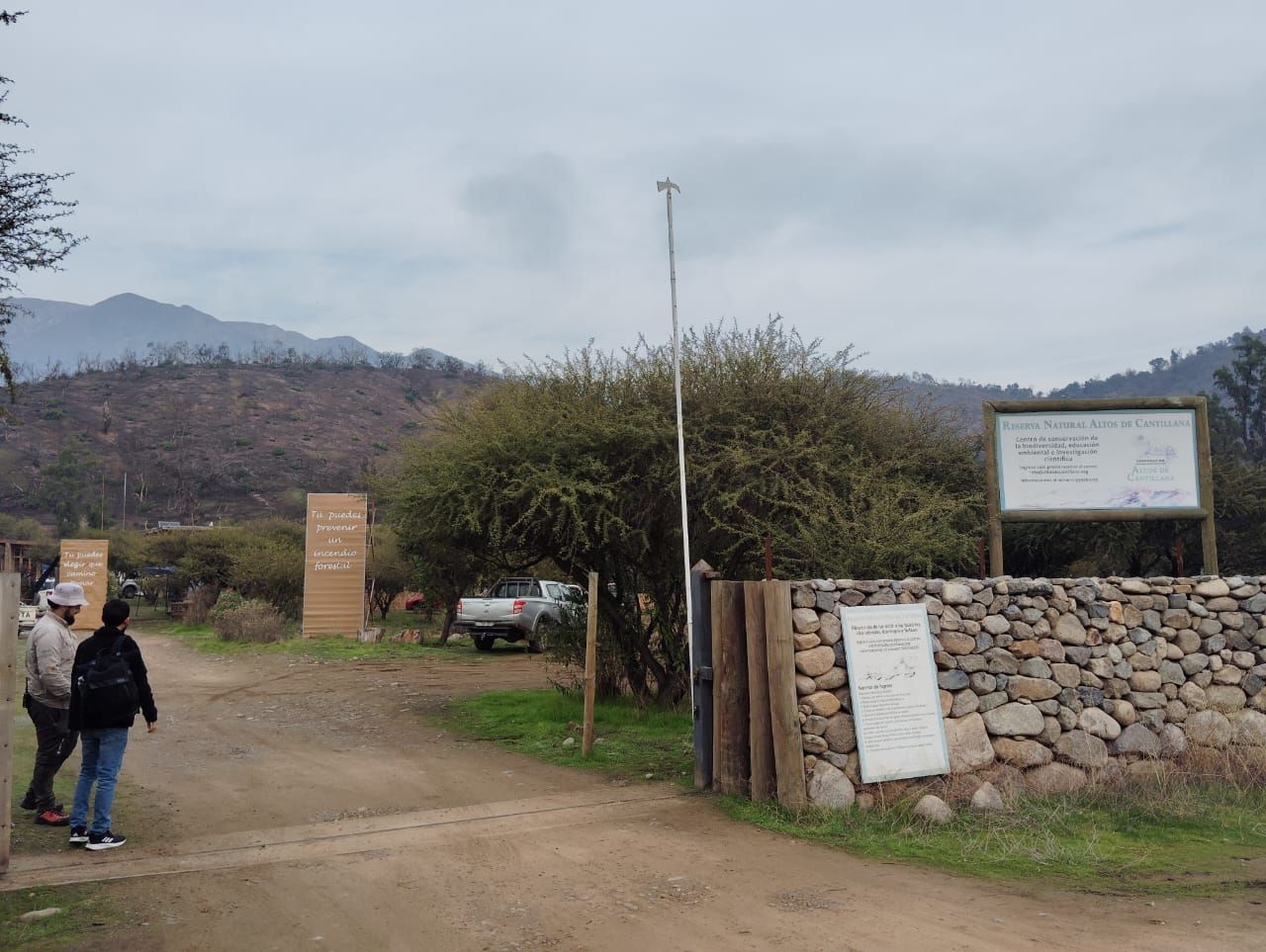
Altos de Cantillana nature reserve site entrance. Pablo González Rivas for Smart Forests, 2024.
Breathing in the Blaze
Fernanda López Quilodrán
Native trees on the verge of extinction that resist the heat of the fire, plants that germinate in the wake of a blaze, micro-worlds that regenerate within the forest. Is there a pattern to their ability to survive? Is the adaptability of the plant kingdom a model to follow?
Being alive implies the ability to breathe. When we exhale, the breaths, particles, and gusts of the different beings that coexist in a milieu intertwine. Could we then converse with other kingdoms through our breaths? How can we communicate with these resilient ecosystems to learn from them? How do we breathe after the fire?
Breathing in the Blaze is a project that explores the understanding of life through the observation and comparison of the relationships that exist in the plant and animal kingdoms, establishing possible conjectures at the moment of breathing,I have based my work on the postulates of biologist Gregory Bateson, who proposed that the observation and comparison of figures, forms, and relationships could establish patterns and criteria to understand the other as a living being. and reflecting, as Haraway would say, on the relationship with meaningful otherness. Using a three-channel CO2 measurement suit, I connect my body's exhalation, that of a plant, and the emissions present in the air. This captured data is transformed into words that appear in real time on an LED screen incorporated into the suit, and are associated with each kingdom and the effects that the various factors of the climate crisis have on each body.
During the Ecologies of Fire residency in Bosque Pehuén at Fundación Mar Adentro, this relationship occurred during a walk in the forest, between the breathing of Araucaria trees, plants close to the ground, and my exhalation. From this action emerges a diagram of relationships that connects the inhabited landscape with fire and the human, making visible the micro-interactions at the chemical level that occur internally and externally. From this diagram emerge the words that generate a poem in real time, which I incorporated into a photograph of the forest.